1. Overview of Value Added Tax (VAT) in China
China implemented a comprehensive Value Added Tax (VAT) reform to replace the previous Business Tax system. Since May 1, 2016, all industries have been subject to VAT. For overseas entities providing taxable services, intangible assets, or goods to purchasers within China, specific withholding rules apply.
Under the Interim Regulations on Value Added Tax and related implementing rules, when an overseas entity or individual sells services or intangible assets within China and does not have a business establishment in China, the domestic purchaser acts as the withholding agent (扣缴义务人).
2. VAT Rates for Cross-Border Services
China applies different VAT rates depending on the nature of the goods or services. The following table summarizes the standard rates that typically apply to transactions involving overseas service providers:
| Category | Applicable Services / Goods | VAT Rate |
|---|---|---|
| Standard Rate | Sale of goods, processing, repair, replacement services, tangible asset leasing | 13% |
| Reduced Rate | Transportation, postal, basic telecom, construction, real estate leasing, sale of real property, land use rights transfer | 9% |
| Modern Services Rate | Modern services (consulting, IT, R&D, design, advertising, etc.), financial & insurance services, lifestyle & cultural services, intangible asset transfers (excluding land use rights) | 6% |
| Zero Rate | Cross-border services subject to zero-rate policy (e.g., certain international transport, R&D services) | 0% |
Note for overseas entities: Small-scale taxpayers typically apply a 3% levy rate, but the purchaser's withholding obligation generally applies the full applicable rate to determine the tax-exclusive price and withheld VAT.
3. VAT Withholding Mechanism
3.1 When Does Withholding Apply?
VAT withholding by the domestic purchaser is required when all of the following conditions are met:
- The seller is an overseas entity or individual (境外单位或个人).
- The seller does not have a business establishment (经营机构) in China.
- The transaction involves taxable services, intangible assets, or real property deemed to be provided / used within China.
- The buyer is a domestic entity or individual located within China.
3.2 How is VAT Calculated for Withholding?
For overseas sellers without a Chinese establishment, the domestic purchaser calculates the withholding VAT using the following formula:
If the contract amount is tax-inclusive:
VAT = Contract Amount ÷ (1 + VAT Rate) × VAT Rate
If the contract amount is tax-exclusive:
VAT = Contract Amount × VAT Rate
In practice, most cross-border service contracts for overseas entities are priced on a tax-inclusive basis from the seller's perspective, meaning the purchaser must gross up the calculation to determine the VAT component.
3.3 Surtaxes (Additional Levies)
In addition to VAT, the withholding agent must also withhold and remit urban maintenance and construction tax (城市维护建设税), education surcharge (教育费附加), and local education surcharge (地方教育附加). These are calculated as percentages of the VAT amount withheld:
| Tax / Surcharge | Urban District | County / Town | Other Areas |
|---|---|---|---|
| Urban Maintenance Tax | 7% | 5% | 1% |
| Education Surcharge | 3% | 3% | 3% |
| Local Education Surcharge | 2% | 2% | 2% |
4. Enterprise Income Tax (EIT) Withholding
Beyond VAT, overseas enterprises without an establishment in China may be subject to Enterprise Income Tax withholding on China-sourced income. Under the Enterprise Income Tax Law and its implementation regulations, the domestic payer is the withholding agent.
The standard withholding tax rate on China-sourced income for non-resident enterprises without an establishment in China is 10% (or a reduced treaty rate if a Double Taxation Agreement applies).
Taxable income generally includes: dividends, interest, royalties, rental income, and gains from property transfers.
4.1 Reduced Rates Under Tax Treaties
China has signed Double Taxation Agreements (DTAs) with many countries and regions, including Hong Kong and Macao. These agreements may reduce the withholding tax rate:
- Hong Kong-Mainland DTA: Dividends (5% if 25%+ ownership, otherwise 10%), Interest (7%), Royalties (generally 7% or treated per domestic law depending on provisions).
- Macao-Mainland DTA: Similar preferential rates for dividends, interest, and royalties.
To enjoy treaty benefits, the overseas enterprise must meet the "beneficial owner" (受益所有人) requirements and file the appropriate documentation with Chinese tax authorities.
5. Special Considerations for Hong Kong & Macao Businesses

5.1 Family Offices and Investment Structures
Many family offices in Hong Kong manage investments that generate China-sourced income, such as dividends from PRC subsidiaries or royalties from intellectual property licensed to mainland entities. Understanding VAT and EIT withholding is essential for cash flow planning.
5.2 Cross-Border Service Arrangements
Common services from Hong Kong and Macao entities to mainland China include:
- Management and consulting services — Subject to 6% VAT withholding.
- Technical and IT services — Subject to 6% VAT withholding; may qualify for zero-rate if conditions are met.
- Brand licensing and trademark royalties — Subject to 6% VAT withholding and EIT withholding.
- Logistics and transportation — Subject to 9% VAT withholding.
5.3 The Greater Bay Area (GBA) Context
Businesses operating within the Guangdong-Hong Kong-Macao Greater Bay Area benefit from closer economic integration. However, cross-border transactions between the mainland and the two SARs are still treated as cross-border for VAT and EIT purposes, and withholding obligations remain.
6. Fapiao (Official Invoice) Requirements
After withholding VAT, the domestic purchaser may need to issue a fapiao (official tax invoice) on behalf of the overseas seller or request one through the tax authority. Proper fapiao management is critical for the domestic purchaser to claim input VAT credits (if eligible as a general VAT taxpayer).
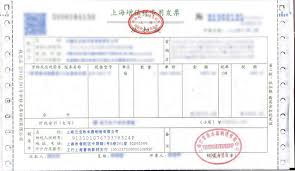
General VAT taxpayers in China can typically claim the withheld VAT as an input VAT credit (进项税额抵扣), provided they obtain the proper documentation from the tax authority showing the withholding has been remitted.
7. Compliance and Filing Deadlines
Withholding agents must remit withheld taxes within prescribed time limits. Generally:
- VAT and surtaxes: Within 15 days of the end of the period in which the withholding obligation arose.
- EIT withholding: Within 7 days from the date the withholding obligation arises (for most payments to non-residents).
Failure to comply with withholding obligations can result in penalties, late payment interest, and denial of input VAT credits for the domestic purchaser.
8. Key Takeaways
For Overseas Sellers
Understand that your Chinese counterparty may be required to withhold VAT, surtaxes, and potentially EIT from your payment. Price your contracts accordingly and consider gross-up clauses.
For Domestic Purchasers
You are the statutory withholding agent. Ensure you calculate, withhold, and remit taxes on time. Maintain proper documentation to support input VAT credits.